

The Agentic Software Development Life Cycle (Agentic SDLC)
Welcome to the future of engineering. At sQuark Browser, we are witnessing a fundamental shift in how technology is built. The traditional, human-bottlenecked Software Development Life Cycle is evolving into an autonomous, closed-loop paradigm: the Agentic SDLC.
Executive Overview: The Paradigm Shift
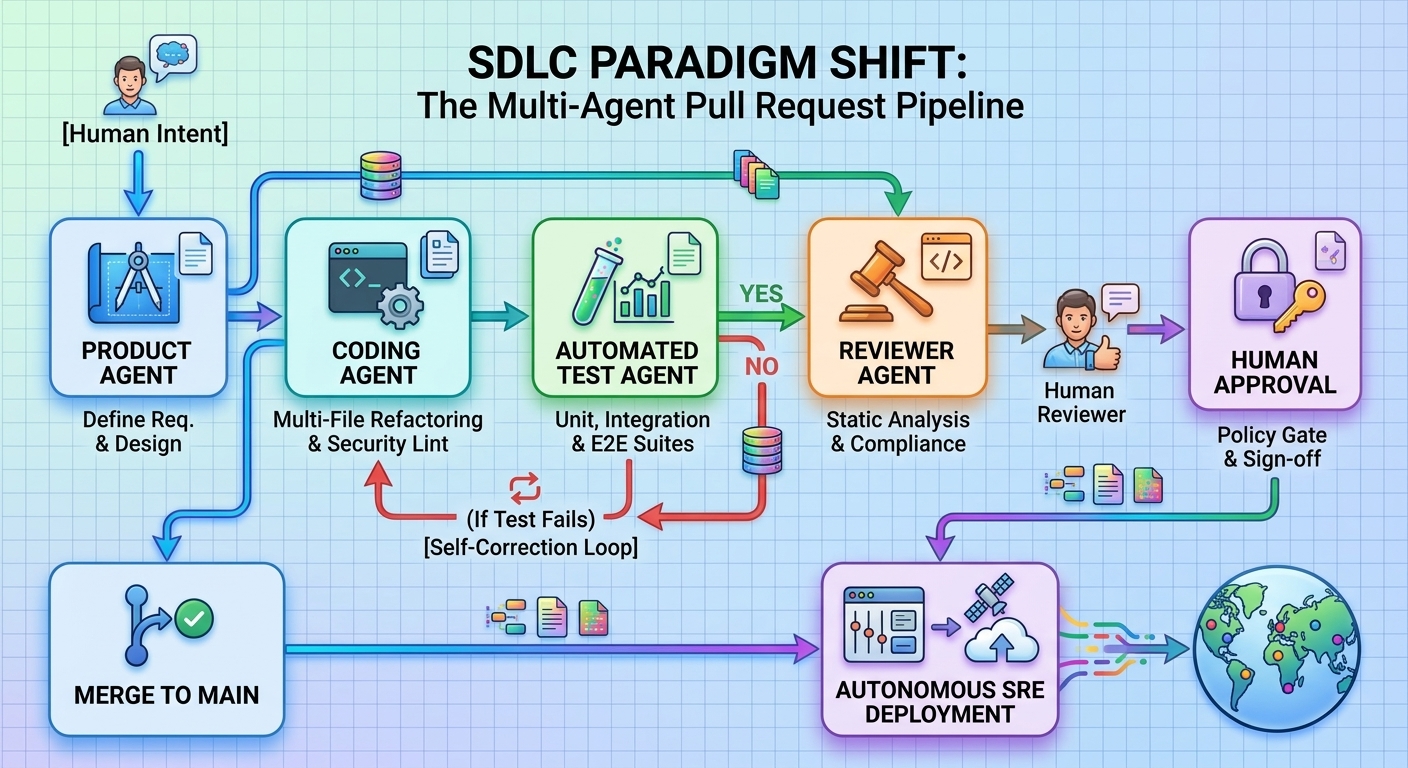
Agents, not hand-offs
The Agentic SDLC replaces rigid, ticket-based hand-offs with an interconnected fabric of specialized Autonomous AI Agents. Instead of tools that wait for human commands, Agentic SDLC utilizes agents that actively monitor repositories, reason through abstract goals, generate code, execute self-debugging loops, and safely manage production infrastructure.
Orchestrators, not executors
Humans shift from executors to orchestrators—defining high-level intent, enforcing governance policies, and conducting strategic code reviews.
Traditional vs. Agentic Engineering
| Phase | Traditional SDLC | Agentic SDLC |
|---|---|---|
| Requirements | Humans draft long PRDs; manual sprint planning. | Agents enrich tickets, map dependencies, and draft technical tasks. |
| Coding | Engineers manually write code, look up APIs, and track files. | Coding agents orchestrate modifications across multi-file architectures. |
| Testing | QA engineers write test scripts; manual reproduction of bugs. | Self-healing test suites dynamically spin up, capture errors, and rewrite code. |
| Code Review | Asynchronous peer review; frequent bottlenecks and style debates. | Continuous automated review for security, style, and logic before human sign-off. |
| Operations | SREs write alerts and manually intervene during outages. | Autonomous SRE agents monitor metrics and auto-trigger rollbacks. |
System Architecture & Technical Flow Diagrams
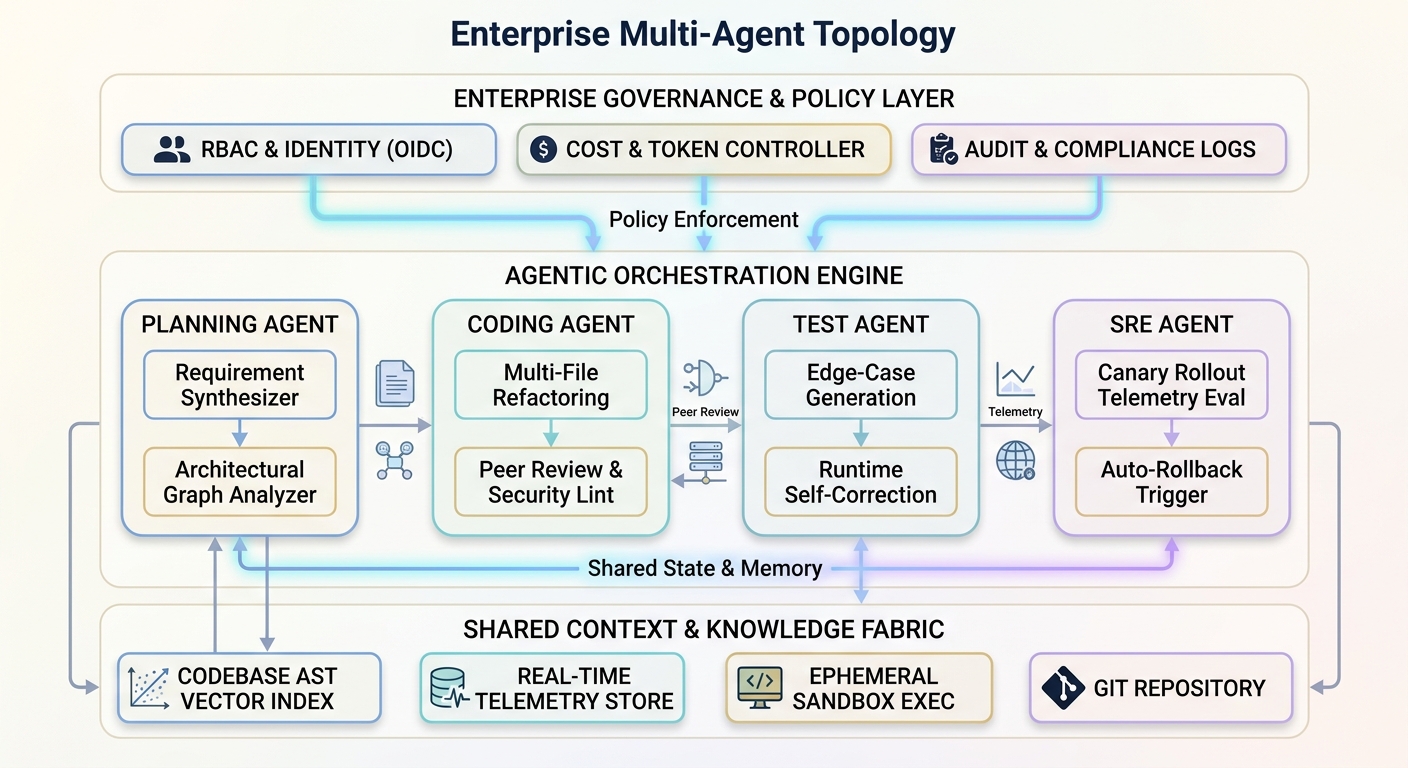
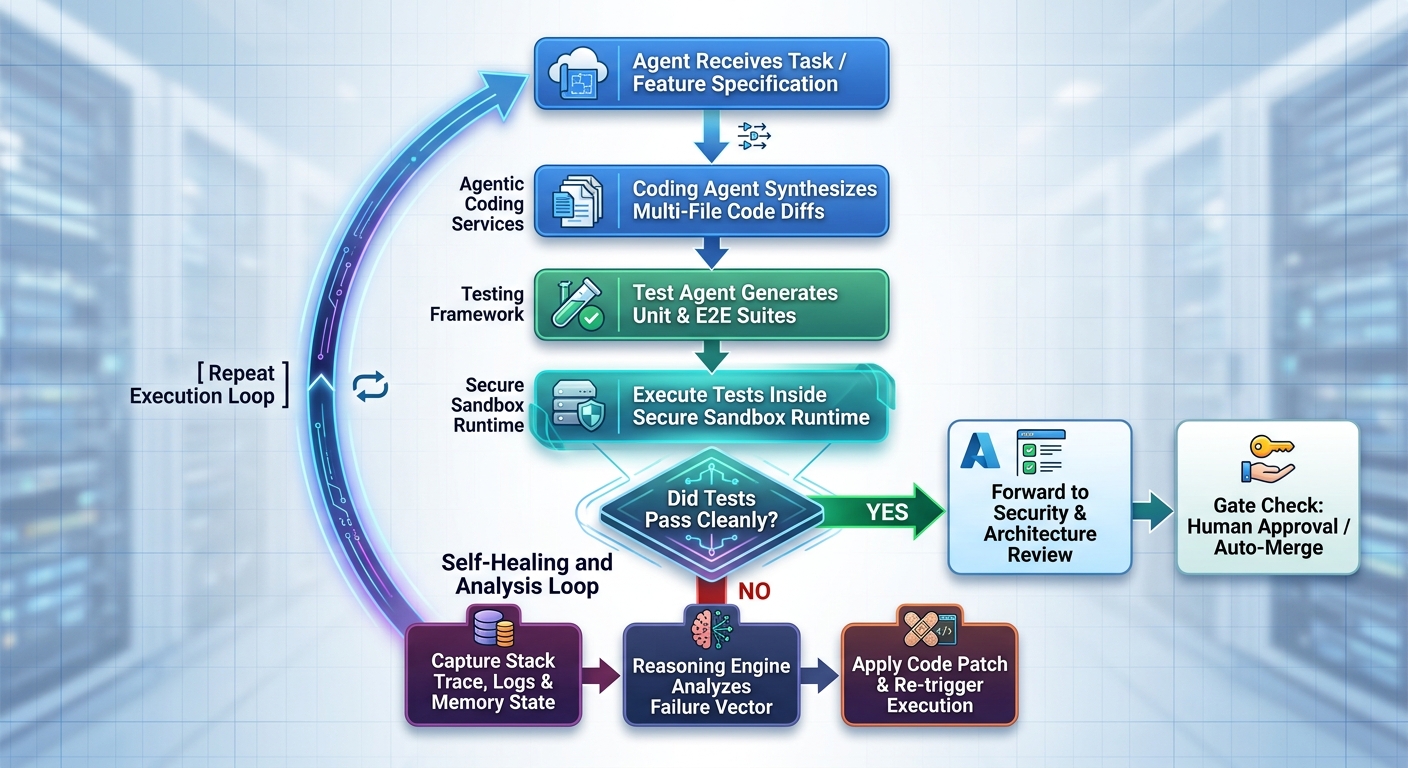
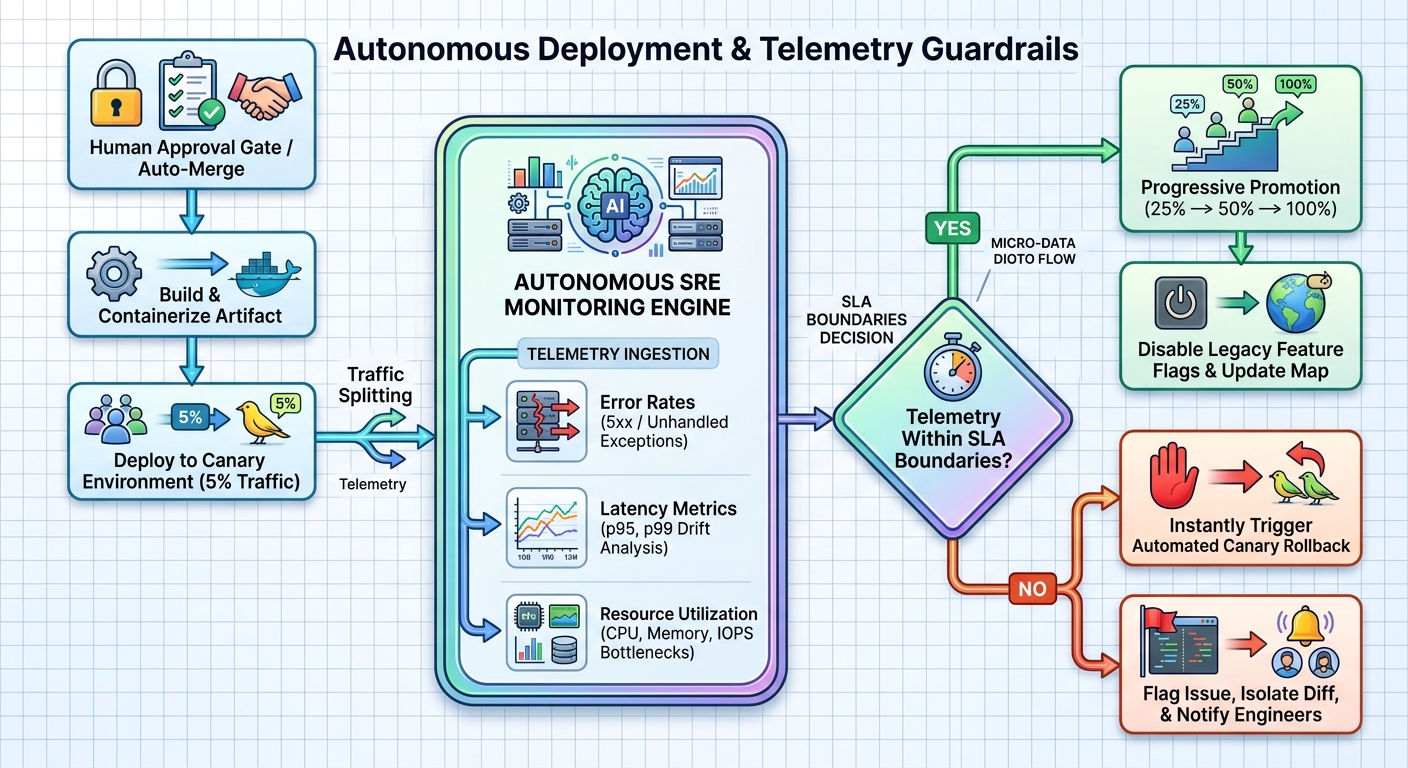
The Four Pillars of the Agentic Architecture
A governance & policy layer on top, a shared context & observability engine underneath, and four specialized pillars in between.
Planning & Intent Capture
Autonomous Ingestion: AI Agents monitor product channels, user feedback, and technical debt backlogs. They enrich raw tickets into fully specified technical requirements.
Architecture Mapping: Before writing a single line of code, dependency agents map changes against the existing system topology, predicting architectural drift and breaking changes.
Multi-Agent Code Synthesis
Context-Aware Coding: Rather than processing isolated prompts, coding agents digest whole-repository context, operating natively across multiple files and packages.
Peer Critique Loops: A “Coder Agent” drafts changes, while a dedicated “Reviewer Agent” analyzes the diff for optimization, security vulnerabilities, and style guidelines—iterating locally before opening a pull request.
Self-Healing Quality Assurance
Dynamic Test Generation: Agents automatically write unit, integration, and end-to-end tests based on the newly updated technical specifications.
Runtime Debugging Flywheel: When a test fails in the CI/CD pipeline, the runtime environment feeds standard error logs back to the agent. The agent reasons through the stack trace, modifies the code, and re-runs the tests autonomously until they pass.
Autonomous Operations & SRE
Canary & Feature Flag Management: Deployment agents progressively roll out code behind feature flags, analyzing telemetry data in real time.
Intelligent Rollbacks: If an anomalous error spike or latency regression is detected, the SRE agent instantly triggers a rollback or disables the faulty feature flag, long before a human engineer receives an alert.
Deep Dive Workflow: The Autonomous PR Flywheel
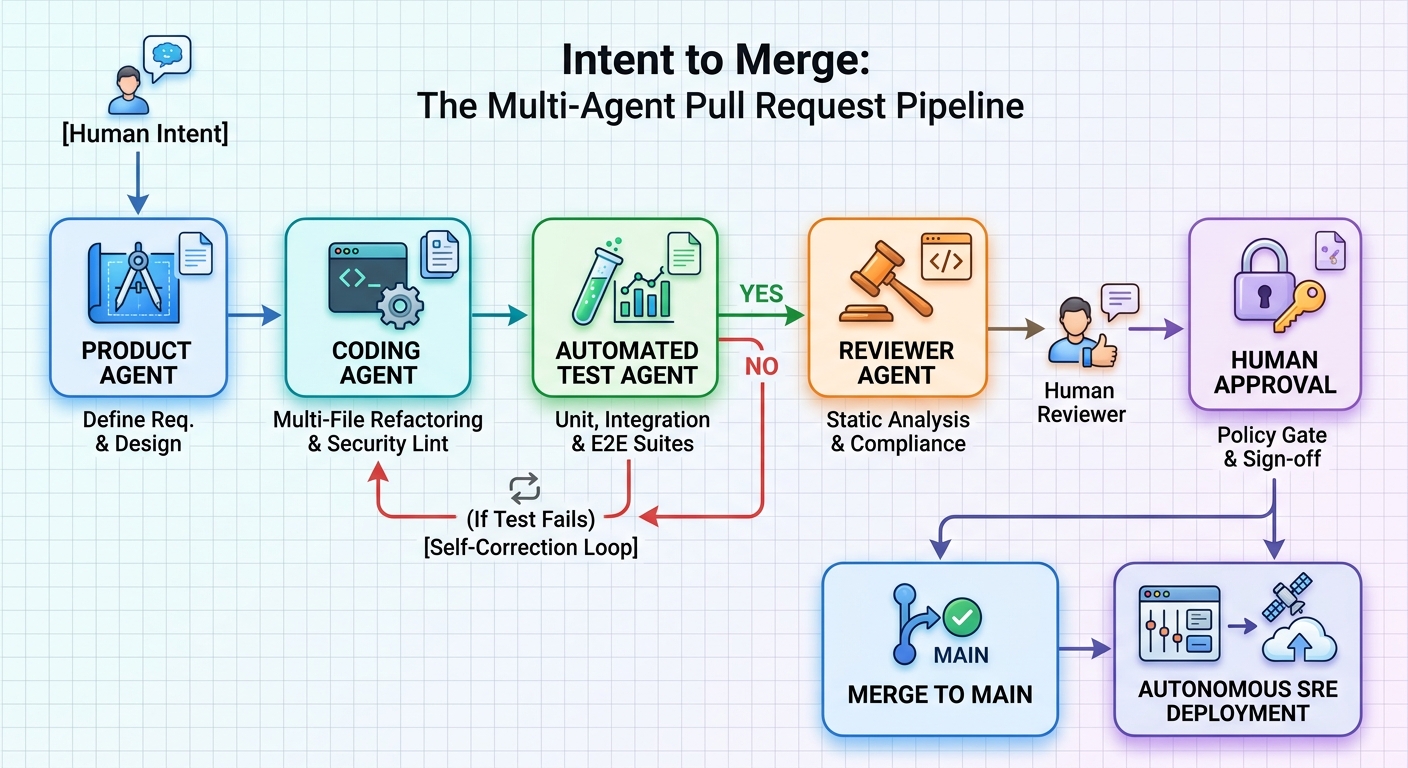
Intent Injection
A human approves a high-level goal (e.g., “Optimize the browser’s token-caching layout for memory efficiency”).
Context Assembly
The orchestration engine indexes the codebase, creating an ephemeral vector map of the targeted modules.
Synthesis & Test Generation
The Coding Agent generates the solution while the Test Agent simulates network conditions and edge-case boundaries.
The Self-Correction Loop
If the test suite uncovers a race condition, the agents converse, refactor, and validate the code entirely in memory.
Human Validation Gate
The final pull request arrives at the human maintainer’s dashboard with a clear summary of changes, test logs, architectural impacts, and a performance impact prediction graph.
The Mesonsoft Framework for Agentic Engineering
To bring the Agentic SDLC to your team, sQuark Browser acts as the foundational runtime interface, supplying:
Secure Context Sandboxing
Isolating agent work environments to guarantee codebase security and prevent accidental leaks.
Deterministic Guardrails
Hard limits on API usage, token spending, and deployment scopes, ensuring AI autonomy never bypasses human policies.
Human-in-the-Loop Interoperability
A visual dashboard mapping out agent thoughts, communication transcripts, and system impacts in real-time.
Transition to autonomous engineering
Built for teams looking to transition their DevOps infrastructure into autonomous agentic topologies safely and scale effectively.
This documentation is built for teams looking to transition their DevOps infrastructure into autonomous agentic topologies safely and scale effectively.